3 AM Confessions: What Night-Shift Radio Hosts Know About Your Town That Daytime Never Will
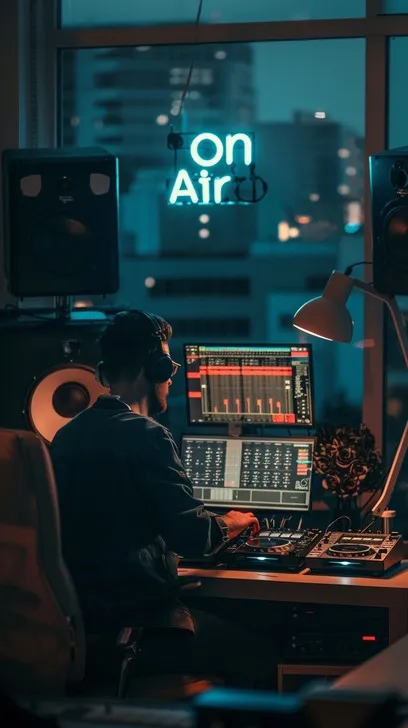
Photo: late night radio DJ broadcasting studio dark glowing equipment, via images.stockcake.com
There's a version of your town that most people never meet. It moves through hospital corridors at 2 AM, hauls freight down empty interstate on-ramps, and stares at apartment ceilings trying to outrun its own thoughts. That version of your community doesn't make it into the morning news. It doesn't trend on social media. But it does call in to community radio.
Ask any overnight host at an independent station and they'll tell you — the graveyard shift changes you. Not in a dramatic way, but in the quiet, accumulating way that comes from spending hundreds of hours being a voice in the dark for people who have nowhere else to turn at 3 AM on a Tuesday.
The Listeners Nobody Talks About
Daytime radio chases the commuter. Drive time is king — that's where the ad dollars flow and where program directors focus their energy. But community stations, freed from the tyranny of ratings and revenue targets, often pour real care into their overnight programming. And what they've discovered is a listener base that's deeply loyal, surprisingly diverse, and hungry for connection in ways that daylight hours don't always allow.
Marcus, who hosts a late-night jazz and conversation show at a listener-supported station in the Midwest, puts it simply: "My audience is nurses coming off a double, security guards on break, insomniacs, long-haul drivers somewhere on I-80. These aren't people who are half-listening while they make coffee. They are with you. They need you to be there."
That intimacy changes the nature of what gets shared. Without the social performance that daylight hours demand, callers drop their guard. Stories come out that would never surface on a noon call-in show — grief that hasn't found a home yet, small victories nobody else thought to celebrate, questions about the world that feel too raw to ask when everyone's watching.
Accidental Documentarians
What's remarkable is that overnight hosts aren't trained journalists or community organizers. They're music lovers, talkers, and radio nerds who just happened to take the shift nobody else wanted. And yet, over time, they accumulate something genuinely valuable: an oral archive of what's actually going on in their community at its most unguarded.
Tanya, who's been running a late-night talk and soul music show at a small Texas station for six years, describes a moment that stuck with her. "I had a caller — older gentleman, retired — who'd been listening every single night since his wife passed. He said the show felt like company. We talked for almost twenty minutes about her. Her cooking, her laugh. That story doesn't exist anywhere else. Nobody wrote it down. But it was real, and it mattered."
These kinds of exchanges don't make headlines. They don't generate podcast downloads or YouTube clips. But they represent something that community radio, at its best, has always done — hold space for the parts of human experience that fall through the cracks of mainstream media.
The Night Tells the Truth
There's a reason people confess things in the dark. The social stakes feel lower. The judgment feels farther away. And when you're a voice on the radio — not a face, not a profile picture, just a warm presence and a good song — people talk to you differently.
Overnight hosts across the country describe a recurring pattern: callers who start by requesting a song and end up sharing something much bigger. A trucker in Ohio who called to ask for Springsteen and ended up talking about his estranged son. A college student in Arizona who dialed in at 4 AM during finals week, clearly not okay, and spent fifteen minutes just being heard.
"You become a kind of first responder sometimes," says Devon, who hosts an overnight indie and alternative show at a Pacific Northwest community station. "Not in a clinical sense. But people reach out to you because you're there. You're the only light on in the whole building, so to speak."
Devon keeps a notebook. Not for any formal purpose — just because the stories feel worth remembering. "I've got years of these little notes. Caller from a fishing town who hadn't slept in three days because the season was bad. A woman who was leaving her marriage and just needed to hear somebody say it was going to be okay. This is community history. It just doesn't look like history yet."
What Daytime Can't Reach
There's a case to be made that late-night community radio serves a public health function that nobody has fully quantified. The connection it provides to isolated, exhausted, or struggling listeners is real and documented in the relationships hosts describe. It's not therapy, and good hosts are careful about that distinction. But it is human contact, and in a country where loneliness has become a recognized public health crisis, that's not nothing.
The overnight shift also captures the economic reality of a community in ways that morning programming rarely does. The shift workers calling in aren't abstractions — they're the people stocking shelves, cleaning offices, keeping emergency rooms running. Their presence in the overnight audience is a reminder of who actually keeps a town moving while everyone else is dreaming.
Keeping the Light On
At Da Barra Radio, we believe that community means showing up for all of your community — not just the parts that are convenient to reach. The overnight hosts doing this work at independent stations across the country aren't getting rich. They're not building personal brands or chasing viral moments. They're keeping a light on for the people who need one.
If you've ever been a 3 AM listener — if you've ever reached for the radio because silence felt too heavy — you already know what this is about. And if you've never thought about who's on the other end of that signal, now's a good time to start.
The night shift is still broadcasting. And your town is still talking.