Skip the Algorithm: Why Independent Radio Still Picks Better Music Than Any App Ever Will
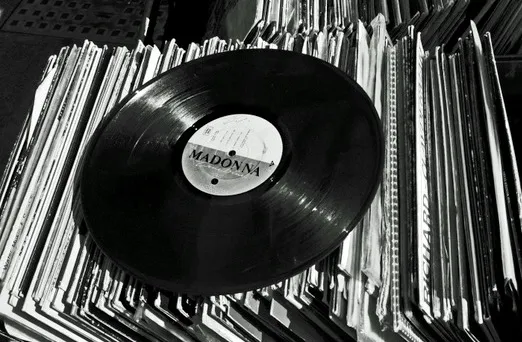
Photo: Des Byrne, CC BY 2.0, via Wikimedia Commons
Let's be honest about what streaming algorithms actually do. They observe your behavior, extrapolate your preferences, and serve you a mirror — a very sophisticated, data-rich mirror, but a mirror nonetheless. Spotify's Discover Weekly isn't discovering anything. It's pattern-matching. It's finding the musical neighborhood you already live in and handing you directions to the house next door.
That's useful. It's not nothing. But it's not music discovery. Not really.
Real music discovery is when something you never would have asked for hits you sideways and changes the way you hear everything else. And increasingly, the only place that's still happening with any regularity is community radio.
The Algorithm Knows What You Like. It Doesn't Know What You Need.
Here's the fundamental problem with letting a machine curate your music life: the algorithm is optimizing for engagement, not growth. It wants you to keep listening. The best way to keep you listening is to keep you comfortable. And comfort, in music terms, means familiarity — songs that sound like songs you already approved of, artists who occupy the same genre lane as your existing favorites.
This creates what researchers have started calling a "taste bubble" — the musical equivalent of the filter bubble that shapes your social media feed. You keep getting served a narrower and narrower slice of what's out there, and because it always sounds pretty good, you never notice what's missing.
What's missing, often, is the weird stuff. The genre-crossing stuff. The local artist who doesn't have 10,000 monthly listeners yet but absolutely should. The 1974 soul track that would rearrange your understanding of a modern hip-hop record if you heard them back to back. Algorithms don't make those connections because those connections don't optimize for retention — they optimize for revelation, and revelation is inefficient.
Human Curation Is a Form of Argument
When a DJ at an independent radio station builds a set, they're making an argument. They're saying: these things belong together, and here's why. That argument might be emotional, historical, political, or just based on a gut feeling developed over years of deep listening. But it's an argument with a perspective behind it — a human perspective, shaped by experience and taste and curiosity.
That's fundamentally different from what an algorithm does. An algorithm makes a calculation. A DJ makes a choice. And choices, unlike calculations, can surprise you.
At community stations across the country, this human curation is doing real work. A show in Nashville that pairs classic country with contemporary Afrobeat. A Sunday morning program in Chicago that moves from gospel to bossa nova to Chicago blues without ever losing the thread. A college-town station in Vermont that dedicates an hour each week to unsigned local artists, no genre restrictions, no follower count requirements.
None of that happens on Spotify. None of it happens because an engagement metric told someone it should. It happens because a person with a vision and a record collection decided it mattered.
Local Artists Are the First Casualty of the Algorithm Economy
If you want to understand the real cost of algorithm-dominated music culture, look at what's happened to local music scenes. The streaming economy rewards scale. An artist with 50,000 monthly listeners generates meaningful streaming revenue. An artist with 500 — someone who plays every weekend at a venue in your city, who is genuinely beloved by a small but real community — generates almost nothing.
Community radio inverts that logic. A local artist getting spun on a station that reaches 10,000 listeners in their actual city is worth more to their career than a million algorithm-delivered streams from people who won't remember the song tomorrow. Radio builds fans. Streaming builds passive consumers.
Independent stations have always been the entry point for artists who weren't yet famous enough for mainstream playlists. That function hasn't disappeared — it's just more important now that the mainstream has been replaced by an algorithm that requires a certain baseline of existing popularity before it even starts pushing your music.
Listener Requests: The Original Crowdsourced Curation
Here's something the tech industry spent billions of dollars to reinvent and still hasn't gotten right: listener requests. Community radio figured this out decades ago. You call in, you ask for a song, a human being considers it in the context of what's already playing, and they either work it in or they tell you why not. The result is a playlist that reflects actual community taste in real time — not predicted preference based on past behavior, but expressed desire in the present moment.
Request shows at independent stations routinely surface music that would never appear in any algorithmic recommendation. The 70-year-old who calls in for a corrido. The teenager asking for a deep cut from a '90s emo record. The regular listener who requests the same song every Friday because it reminds her of her late husband. These aren't data points. They're people. And honoring them produces music programming that feels like it comes from somewhere — from a community, a place, a shared history.
This Is What Cultural Resistance Looks Like
We're not going to pretend that community radio is going to out-compete Spotify for market share. That's not the point. The point is that independent radio stations are preserving something that the algorithm economy is actively eroding: the idea that music curation is a cultural act, not a data science problem.
When Da Barra Radio talks about your community, your frequency, your voice — this is part of what that means. The music you hear on a community station is chosen by someone who lives where you live, who cares about what you care about, who wants to show you something you haven't heard before because they think you're ready for it. That's a relationship. Spotify is a service.
Services are convenient. Relationships change you.
The algorithm will keep giving you what you already like. Independent radio will keep arguing for what you might love if you gave it a chance. We know which one we'd rather be.