When Words Run Out: How Community Radio Holds Space for the Grieving That No One Else Will

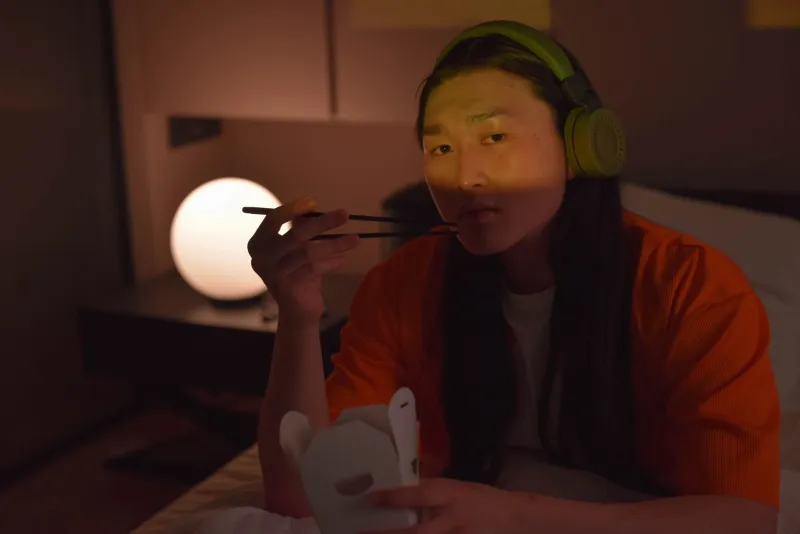
Photo by Photo by Sanberk Küçükkelepçe on Unsplash on Unsplash
There's a particular kind of 2 a.m. that grief creates. It's not the same as regular sleeplessness. It's heavier. Quieter in the worst way. And for a growing number of people across the country, the thing that fills that silence isn't a hotline, a support group, or a carefully curated playlist on a streaming app. It's the radio.
Not the slick, syndicated kind. The neighborhood kind. The kind where the host knows your town's history, probably went to your cousin's graduation, and doesn't rush you off the phone when you call in crying about someone you lost six months ago — or six years ago.
Community radio wasn't designed to be a grief counselor. But somewhere along the way, for a lot of listeners, that's exactly what it became.
The Waiting List Problem No One Talks About
Here's the reality most people don't want to say out loud: the mental health system in this country is overwhelmed. Therapist waitlists in many cities run anywhere from six weeks to six months. Grief-specific counselors are even harder to find — and even harder to afford. Bereavement leave, for most American workers, lasts a few days. After the funeral, the casseroles stop coming. The texts get shorter. And the world more or less expects you to get back to it.
But grief doesn't work on that timeline. Anyone who's lost someone knows that the hardest moments often hit later — three months out, a year out, on a random Tuesday when a song comes on and suddenly you can't breathe.
Social media, for all its reach, tends to make this worse. There's a performance pressure baked into posting about loss publicly. You're either oversharing or going silent, and either way, the algorithm doesn't care. The likes dry up. The comments move on.
Radio doesn't move on.
What Makes the Airwaves Different
There's something about the one-way intimacy of radio that creates a uniquely safe container for grief. You don't have to perform. You don't have to look presentable. You can be completely undone in your kitchen at midnight, and the voice coming through that speaker is just... there. Consistent. Unhurried.
For hosts at community stations, this dynamic isn't lost on them.
Many describe callers who open up in ways they never expected — not because the host has a psychology degree, but precisely because they don't. There's no clinical framework. No intake form. Just two people, a phone line, and the shared understanding that something real is happening.
Dedication segments have quietly become one of the most emotionally loaded features in community radio. What might look like a simple song request carries enormous weight when someone calls in asking for a track their late mother loved, or the song that was playing the last time they saw their brother. The act of requesting, of hearing it played, of knowing that someone on the other end acknowledged the loss — it does something that a grief pamphlet simply cannot.
Memorial Hours and the Radio That Remembers
Some stations have gone even further, building dedicated programming around communal mourning. Memorial segments — sometimes weekly, sometimes tied to anniversaries or local tragedies — give listeners a recurring space to speak names out loud. To say: this person existed, and I'm not done missing them.
In smaller communities especially, this carries enormous cultural weight. When a town loses someone — to illness, to violence, to an accident — the local station often becomes the first place people gather, even if they're gathering from their living rooms. The host reads the name. The song plays. And for a few minutes, an entire neighborhood grieves together without anyone having to leave the house.
This is something national radio simply can't replicate. A syndicated host in a glass tower doesn't know that the woman being remembered coached Little League for twenty years, or that the man who passed away last spring used to bring donuts to the polling station every election day. Community radio knows. And that specificity is everything when you're grieving.
"I Didn't Know Where Else to Turn"
The stories people share about these moments are remarkably consistent in their emotional shape. Someone is alone. Someone is struggling. They turn on the radio — maybe out of habit, maybe just to fill the silence — and something happens. A song. A host's offhand comment. A caller sharing something that mirrors their own pain exactly.
And they feel, for the first time in weeks, like they're not completely alone in it.
That's not a small thing. That's not a footnote. For a lot of people, that moment is the reason they made it through the night.
What's notable is that this rarely happens because a station set out to create a grief resource. It happens because community radio, by its very nature, reflects the full texture of people's lives — including the hard parts. When a station is genuinely rooted in its community, loss is part of what it broadcasts. Because loss is part of what the community lives.
The Limits — and Why They Don't Undercut the Value
To be clear: community radio isn't a replacement for professional mental health support. Hosts aren't therapists, and no one should treat them as such. There are real limits to what a late-night DJ can and should carry, and the best hosts know those limits well. Many have learned, sometimes through difficult on-air moments, how to gently point listeners toward additional resources without making them feel dismissed.
But the fact that radio has limits doesn't diminish what it provides. It provides presence. It provides continuity. It provides a voice that shows up every night, regardless of whether you're having a good grief day or a terrible one. That kind of reliability is rarer than it should be.
And in the gaps between therapy sessions, between support group meetings, between the moments when friends and family have the bandwidth to show up — radio fills something real.
Why This Matters Right Now
We are, by most measures, in a prolonged national moment of collective loss. The pandemic years hollowed out communities in ways that are still being reckoned with. Overdose deaths, gun violence, economic displacement — these aren't abstract statistics. They're neighbors, relatives, regulars at the diner, kids from the school down the street.
And community radio, underfunded and undervalued as it often is, keeps showing up for all of it.
That's worth recognizing. Not just as a feel-good footnote to a story about media, but as a genuine public health observation. The spaces where people can grieve without judgment, without a copay, without a waitlist — those spaces matter. They save lives in quiet ways that never make the headlines.
At Da Barra Radio, we believe your voice belongs on the air — including when that voice is cracked, uncertain, or calling in at midnight because you didn't know where else to go. That's not an edge case. That's the whole point.
Tune in. We're not going anywhere.