Gone But Not Silent: What Dead Stations Left Behind for the Radio Stations Still Breathing
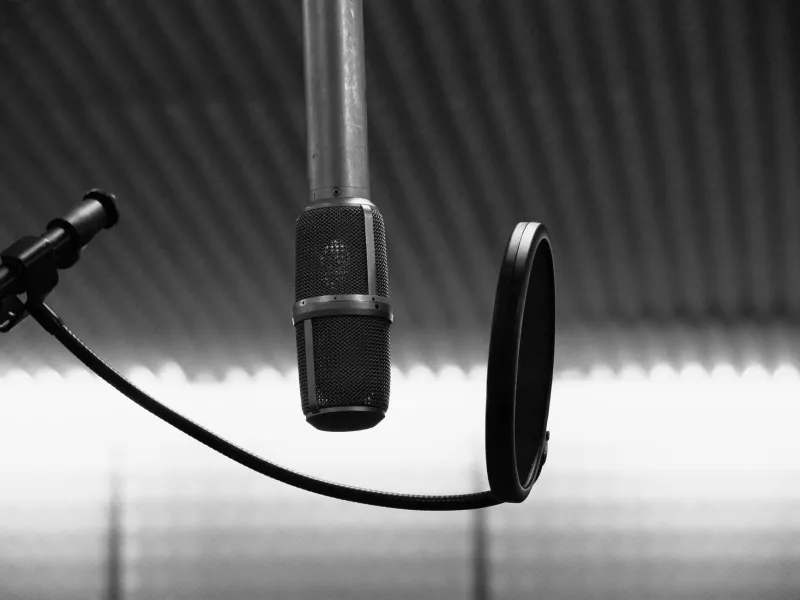
There's a particular kind of grief that comes with a dead frequency. One day you're spinning records, fielding call-ins, reading community announcements — and then the transmitter goes quiet. The website goes dark. The volunteers scatter. And the neighborhood that once tuned in every morning is left with nothing but static where something real used to be.
But here's the thing about community radio stations that shut down: they rarely disappear completely. They leave behind institutional knowledge, cautionary patterns, and sometimes — if the community is lucky — the seeds of something better.
We dug into some of these closures. We talked to people who built stations from scratch, watched them fold, and either started over or advised those who did. What came back wasn't a collection of sad stories. It was a masterclass in what makes grassroots radio actually work — and what quietly kills it.
The Slow Fade vs. The Hard Stop
Not all station closures look the same. Some are dramatic — a licensing dispute, a sudden loss of a key donor, a fire in the studio. But most of the time, the end comes slowly. A slow fade. Volunteers stop showing up. Programming gets patchy. The audience drifts. By the time someone officially pulls the plug, the station has already been dying for months.
That slow fade is actually the more dangerous pattern, because it's easy to miss until it's too late.
"We kept telling ourselves things would turn around," said one former station manager from a small Midwestern college town whose station went dark after nearly a decade on air. "We had one really good fundraiser year and thought we'd figured it out. We hadn't. We'd just delayed the inevitable by about 18 months."
The lesson other operators take from that kind of story is simple but hard to act on: don't confuse a good quarter for a fixed problem. Sustainability in community radio isn't a moment — it's a system.
The Volunteer Cliff
Ask almost anyone who's studied community radio closures what the number one operational failure is, and you'll hear some version of the same answer: volunteer burnout.
Independent stations run on people who care deeply and get paid nothing. That's the beauty of the model. It's also its most fragile point. When a station relies on five or six deeply committed people to hold everything together, and two of those people move away or burn out in the same season, the whole operation can start to collapse under its own weight.
"We didn't have succession planning. We didn't even really have documentation," said one former program director whose station in the Pacific Northwest shut down after a core group of founders aged out and moved on. "Everything lived in people's heads. When those people left, the institutional memory left with them."
The stations that survive — and the ones being built smarter today — treat volunteer infrastructure like a real organizational asset. That means written processes, cross-training, and deliberate recruitment of younger voices before the older guard is gone.
Money Myths That Sink Ships
There's a persistent fantasy in community radio that passion is enough. That if the programming is good and the mission is pure, the money will follow. Sometimes it does. More often, it doesn't — or it doesn't come in the forms the station needs.
One of the most common financial mistakes that leads to closure is over-reliance on a single funding stream. Whether that's one major donor, one grant, or one annual fundraiser, the moment that source dries up, the station is in crisis mode with no fallback.
Some stations also fall into the trap of chasing grant money that shapes their programming in ways that don't serve their actual community. They build shows around what funders want to hear instead of what listeners actually need, and the audience feels it.
"We were so focused on keeping the lights on that we stopped asking whether we were still doing the thing we set out to do," said one former board member from a station that closed after eight years. "By the end, we were programming for grant reports, not for our neighborhood."
The stations learning from these closures are building diversified funding models from day one — listener memberships, local business sponsorships, event revenue, and grants — so no single source can sink them.
When Failure Sparks Something New
Here's the part of the story that gets overlooked: sometimes a station closing is the beginning of something better.
In several documented cases across the country, the closure of one community station created the conditions for a stronger one to emerge. Former volunteers who learned hard lessons came back together with clearer structures. Communities that had taken a station for granted suddenly understood its value and showed up with more support the second time around.
There's a station operating in the Southeast right now — doing genuinely good work, consistently funded, with a deep volunteer bench — that exists almost entirely because of what its founders learned from watching a previous station fail. They went to that station's final board meetings. They interviewed former volunteers. They essentially did a post-mortem before they ever turned on a transmitter.
"We knew exactly what killed the last one," said one of that station's co-founders. "So we built the opposite of those things into our structure from the start. We weren't smarter than them — we just had the advantage of their experience."
What the Archive Leaves Behind
There's also a quieter kind of legacy that closed stations leave — their recordings, their playlists, their community histories. Some of it gets preserved. A lot of it doesn't.
This is one of the real losses that doesn't get talked about enough. Community radio stations are often the only institutions capturing hyperlocal oral history — interviews with neighborhood elders, coverage of local elections, documentation of community events that no newspaper showed up to. When a station closes without archiving that material, a piece of community memory disappears with it.
The stations paying attention to this are building archival practices into their operations now, not treating it as something to figure out later. Partnerships with local libraries, universities, and historical societies are making a difference in some markets.
The Lesson That Doesn't Get Old
If there's a single through-line in every conversation about community radio closures, it's this: the stations that survive are the ones that treat themselves like essential infrastructure, not passion projects.
Passion gets you started. Structure keeps you on air.
The stations that have been around for decades — the ones that have weathered funding crunches, leadership transitions, and the chaos of the media landscape shifting underneath them — didn't survive because they were lucky. They survived because someone, at some point, got serious about the unglamorous work of building a real organization around the beautiful thing they wanted to create.
The dead stations? They weren't failures. They were drafts. And the people building community radio today — at Da Barra Radio and stations like it all across the country — are writing the final version with everything those drafts taught them.
The frequency goes quiet. The lesson stays loud.