Same Station, Every Morning: The Quiet Power of Radio Loyalty in a World of Infinite Options
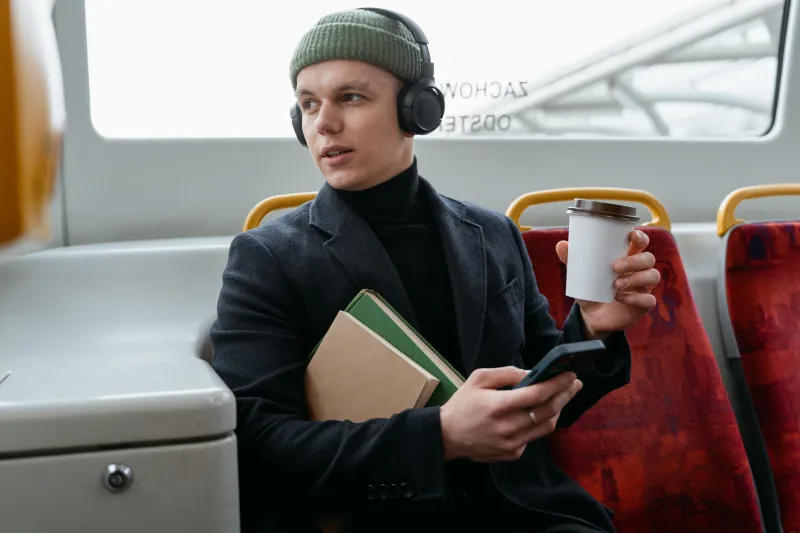
Somewhere between the first cup of coffee and the commute out the driveway, Marcus Webb does the same thing he's done every weekday for the past eleven years. He turns on the radio. Same station. Same morning show. Same voices cracking jokes about local traffic he already knows is bad.
He's got Spotify. He's got a YouTube Premium account. He could pull up any playlist in the world before the car even warms up. But he doesn't.
"It's not even really about the music anymore," Marcus, a 44-year-old electrician from outside Columbus, Ohio, told us. "It's more like... I know those people. They know this town. When something happens around here, they're going to talk about it. No algorithm's going to give me that."
Marcus is not an outlier. He's a type — one that streaming executives have spent years trying to understand and, frankly, underestimate.
The Paradox of Too Much Choice
Here's the thing about infinite options: they're exhausting. Decision fatigue is real, and the modern listener is drowning in it. Streaming platforms offer tens of millions of songs. Podcasts number in the hundreds of thousands. Yet according to recent data from Edison Research, a significant chunk of Americans still list AM/FM radio as part of their daily listening routine — and for community and independent stations, the loyalty numbers are often even stronger than for commercial giants.
There's a psychological concept called the "mere exposure effect" — the idea that repeated contact with something tends to increase our positive feelings toward it. Radio, by its very nature, is built on that principle. You hear the same DJ sign off the same way every Friday. You hear the same jingle for a local hardware store. You hear the same community announcements. Over time, that repetition doesn't feel stale. It feels like home.
Dr. Priya Nair, a behavioral psychologist who studies media habits, puts it plainly: "People underestimate how much comfort comes from predictability. A familiar radio station is essentially a low-stakes ritual. It signals safety, routine, belonging. That's hard to manufacture with an algorithm."
More Than Background Noise
For longtime listeners, the relationship with their station often defies easy categorization. It's not quite fandom. It's not purely habit. Several people we spoke with used the word "friendship" — which sounds strange until you think about how many hours a week they've spent in the company of the same voices.
Teresa Okafor has been tuning into her local community station in the Dallas–Fort Worth area for going on eight years. She started listening during a rough patch — a divorce, a job change, a period where she describes herself as "pretty isolated." The station's afternoon host, a guy named Darnell who does a mix of soul, funk, and what he calls "feel-good philosophy," became a kind of anchor.
"He doesn't know me," Teresa says, laughing a little. "But I know him. I know when he's having a bad day. I know what music he plays when something's heavy on his mind. There's this intimacy to it that I can't really explain. It's one-directional, I know that. But it still feels real."
That parasocial bond — the sense of knowing someone who doesn't know you back — is something community radio cultivates almost accidentally. Unlike polished national personalities managed by PR teams, local DJs are just... people. They mess up. They go off-script. They talk about their dog or their kid's soccer game. That realness is the whole product.
What Stations Do to Earn That Loyalty
Listener loyalty doesn't just happen. The community stations that build genuinely devoted audiences tend to share a few things in common.
Consistency is everything. Not just in scheduling — though that matters — but in voice and values. Listeners need to know what a station stands for. Is it the place for local music discovery? Is it where the neighborhood comes to process hard news? Is it where you go to laugh on a Friday afternoon? The stations that hold their lane, even when trends shift, are the ones people keep coming back to.
Personality over production. Slick doesn't win on community radio. Authentic does. A host who stumbles over an intro but clearly loves what they're playing will outlast a perfectly produced segment that feels hollow. Listeners are remarkably good at detecting when someone's phoning it in.
Actually showing up for the community. This one sounds obvious, but it's where a lot of stations fall short. The stations with the most loyal listeners are the ones that show up at the block party, that cover the school board meeting nobody else will, that play the local band before anyone else takes the chance. Loyalty is earned outside the studio as much as inside it.
The Ritual of Returning
There's something almost ceremonial about the act of tuning in. It marks time. It structures the day. For people who work from home, a familiar station can be the closest thing to a social environment they get between Monday and Friday. For retirees, it's company. For night-shift workers driving home at 4 AM, it's proof that someone else is up.
Jamie Reyes, a nurse in Albuquerque, listens to a local independent station on her drive home after overnight shifts. "By 6 AM, I'm fried," she says. "I don't want to make a single decision. I just want someone to tell me what comes next. And they do. Every time."
That surrender — the willingness to let someone else curate your next thirty minutes — is something streaming can technically offer but rarely delivers with the same warmth. A playlist doesn't talk to you. It doesn't dedicate a song to a listener going through chemo. It doesn't stop everything to say "hey, if you're out there and you're struggling today, we see you."
Community radio does those things. And people remember.
Why This Matters Right Now
We're living through a strange cultural moment where personalization has become so extreme that shared experience is getting harder to find. Everybody's feed is different. Everybody's algorithm is tuned to their specific behavior. There's a real cost to that — a slow erosion of the common ground that holds communities together.
Community radio, imperfect and underfunded as it often is, pushes back against that drift. When the same station plays in the diner, the barbershop, and the car of the woman stuck in traffic three blocks over, something happens. A thread forms. A tiny shared world.
Marcus Webb, back in Ohio, probably can't articulate all of this. He just knows he's not switching stations anytime soon.
"Some things you just don't mess with," he says. "That morning show's been there longer than most things in my life have. That means something."
Yeah. It really does.