After the Newsroom Closed, the Radio Stayed On: How Volunteer Broadcasters Became the Last Reporters in Town
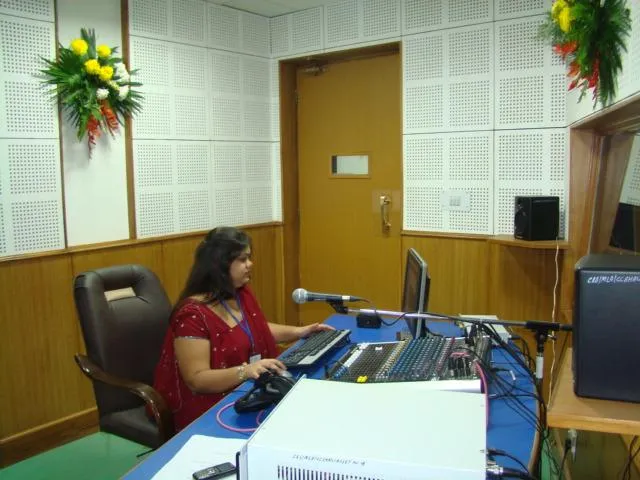
Photo: World Development Foundation, New Delhi, India, CC BY-SA 3.0, via Wikimedia Commons
In 2019, the weekly newspaper in Bowie County, Texas went dark after more than a hundred years in print. By 2021, a community radio station with a part-time staff and a handful of dedicated volunteers had become the primary source of local news for roughly 93,000 people. Nobody made that decision at a board meeting. It just happened, the way a lot of necessary things happen — because the need was there and someone was already holding a microphone.
This story is playing out across the United States with a frequency that should alarm anyone who cares about informed democracy at the local level. The numbers are grim. According to Northwestern University's Medill Local News Initiative, more than 2,500 newspapers have closed since 2005. That's not a trend — it's a collapse. And it has left vast stretches of the country functionally blind to their own civic life.
But in that void, something unexpected is happening.
The Accidental Newsroom
Community radio stations were never designed to be newspapers. Most of them were built around music, local culture, call-in shows, maybe a morning program with traffic and weather. Journalism wasn't the point. The point was voice — giving a community its own frequency.
But when the Courier folds and the Gazette goes to a skeleton web-only operation, people start asking questions of whoever's left. And in a lot of towns, the person left is the radio host.
"We started doing a five-minute news segment because listeners were asking us what was happening at the school board," says Carla, who manages programming at a community station in rural Mississippi. "That five minutes turned into fifteen. Then we started sending people to meetings. Now we have three volunteers who basically function as reporters, and none of them have journalism degrees."
Carla doesn't say this with pride, exactly. She says it with the exhausted pragmatism of someone who understands both the importance of what they're doing and the weight of doing it without adequate resources.
"We're trying to do real accountability journalism on a budget that wouldn't cover a part-time employee at a real newsroom," she says. "We make it work because we have to. But I want people to understand — this is not a long-term solution. This is a stopgap."
What Gets Lost Without Local News
The consequences of local news deserts are concrete and measurable. Research from the University of Notre Dame found that municipal borrowing costs go up in communities that lose their newspaper — a direct financial penalty for reduced civic oversight. Voter turnout in local elections drops. Corruption in local government goes undetected for longer. School boards and city councils make decisions that affect thousands of people with essentially no public scrutiny.
This is not abstract. In one Missouri county that lost its only newspaper in 2020, a proposed zoning change that would have displaced a low-income neighborhood nearly passed without any public comment — until a community radio host mentioned it on air almost by accident. The phones lit up. The vote was delayed. The plan was revised.
"I didn't think of myself as doing journalism," the host said afterward. "I was just talking about what I'd heard at the diner that morning."
That's both the power and the problem with community radio filling the news gap. It works when it works. But it's informal, inconsistent, and deeply dependent on individual personalities rather than institutional processes.
The Stations Doing It Seriously
Not all of this is improvised. Some community stations have made a deliberate, structured commitment to local news and are building real (if lean) operations to support it.
WRFU in Urbana, Illinois has developed a community news desk that trains volunteers in basic reporting standards and publishes stories both on-air and online. They've covered city council, housing, and local elections with a rigor that would be recognizable to any traditional journalist.
KWMR in Point Reyes, California — a coastal community with no daily newspaper — has been doing local news programming for years, relying on a mix of paid staff and trained volunteers. Their coverage of wildfire risk and emergency preparedness has been credited with reaching residents who wouldn't have gotten information any other way.
These stations share a few things in common: they take editorial standards seriously, they've invested in training, and they've been transparent with their communities about what they can and can't do. They're not pretending to be the New York Times. They're doing something harder in some ways — being the only game in town while being honest about their limitations.
The Challenges Nobody Talks About Enough
The romance of grassroots journalism is real, but so are the obstacles.
First, there's the liability question. Volunteer reporters who haven't been trained in defamation law can create legal exposure for stations that can't afford a lawyer, let alone a lawsuit. Some stations have simply stopped covering anything controversial for this reason — which is its own form of failure.
Then there's sustainability. Volunteers burn out. The person who built your news operation from scratch leaves for a paying job, and suddenly you're starting over. Unlike a newsroom with institutional memory and documented processes, community radio news often lives in one person's head.
Finally, there's the question of trust. Community radio has credibility in the communities it serves, but it's a credibility built on relationships and personality rather than editorial process. When something goes wrong — a factual error, a story that's perceived as taking sides — the damage can be significant.
"We had to correct something once, a mistake about a local official," says James, who runs a community station in rural Georgia. "And even though we corrected it immediately and publicly, some people never fully trusted us again. That's the fragility of what we're doing. We don't have a hundred years of institutional credibility to fall back on."
A Stopgap With a Heartbeat
Here's the honest truth: community radio cannot fully replace local journalism. It was never built to do that, and pretending otherwise sets up both the stations and the communities they serve for disappointment.
What it can do — what it is doing, right now, in hundreds of towns — is hold the line. Keep the conversation going. Make sure someone shows up to the school board meeting and tells the neighborhood what happened. Give people a place to call in when something feels wrong.
That's not nothing. In a media desert, a single voice on a local frequency can be the difference between a community that knows what's happening to it and one that doesn't.
Da Barra Radio's whole reason for existing is the belief that your community deserves to be heard — not just in the cultural sense, but in the civic one. The music matters. The call-in shows matter. And yes, showing up to the zoning meeting with a recorder and a commitment to getting it right — that matters too.
The newsrooms closed. The radio stayed on. That's not a coincidence. That's a community refusing to go quiet.