Dusty Grooves and Deep Frequencies: How Community Radio Is Rescuing the Music Nobody Plays Anymore
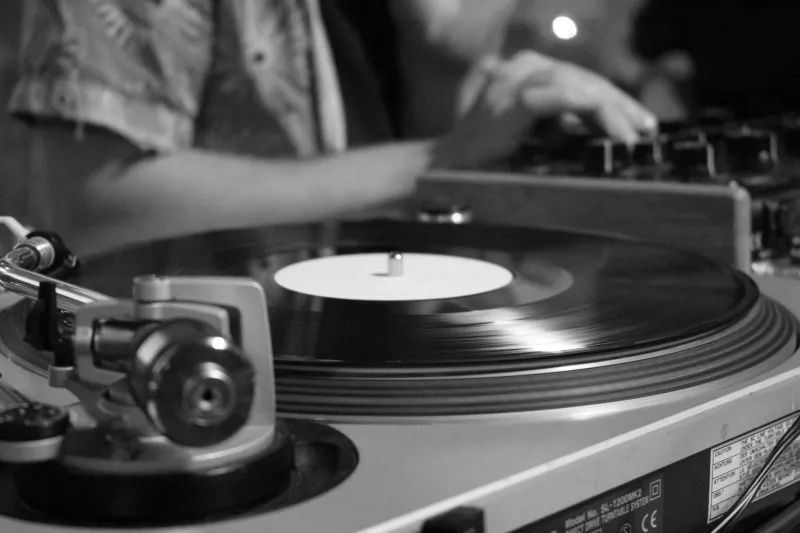
Somewhere in a mid-sized city in Ohio, a volunteer DJ named Marcus is pulling a 1953 recording of country blues guitarist Mississippi Fred McDowell out of a crate and holding it up like he just found buried treasure. Because to him, he kind of did.
"Most people under forty have never heard this man's name," Marcus says, slipping the record onto the turntable. "Tonight, a few hundred people in this city are going to."
That's the job. That's the whole job. And it's happening at independent and community radio stations from Portland, Oregon to Asheville, North Carolina — small operations running on listener donations, volunteer hours, and a stubborn refusal to let entire genres of American music quietly disappear.
What Commercial Radio Left Behind
Let's be real about what happened. When commercial radio consolidated through the late '90s and 2000s, playlists shrank. Formats hardened. The same research-tested, focus-grouped songs started cycling across stations in cities that had nothing else in common. Country, pop, classic rock — all of it got narrowed down to the safest, most broadly palatable version of itself.
The casualties were enormous. Early country blues. Pre-war jazz. Cajun and zydeco. Regional folk traditions. Experimental electronic music from the '70s and '80s. Psychedelic soul. Appalachian string band music. Sacred steel gospel. These weren't fringe tastes — they were foundational American sounds, the DNA underneath everything that came after. Commercial radio just decided they weren't profitable enough to bother with.
So they vanished from the airwaves. Not from existence, but from the public conversation. From the casual discovery that radio, at its best, has always made possible.
The Stations Filling the Silence
Community and independent stations have been chipping away at that silence for years. Some run dedicated genre shows — a two-hour block of nothing but Chicago electric blues on Wednesday nights, an early-morning slot for traditional Irish music, a Friday deep-dive into '60s and '70s Brazilian tropicália. Others build their entire programming philosophy around the idea that their city deserves to hear music that sounds like its actual history, not a national playlist.
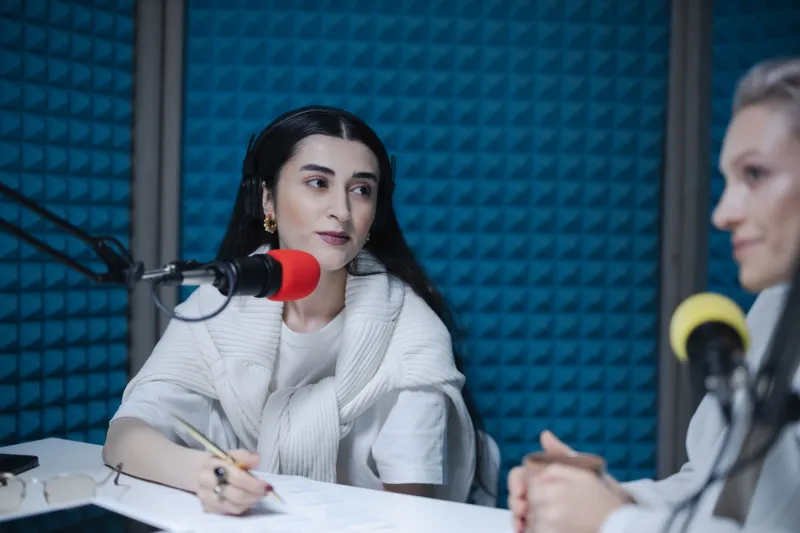
Lisa, a programmer at a listener-supported station in the Pacific Northwest, describes her philosophy pretty simply: "We ask ourselves what's not being played anywhere else. That's where we start."
Her station runs a monthly show dedicated entirely to experimental electronic music from the 1970s — synthesizer pioneers, early tape manipulation, composers working in university labs who were building sounds that wouldn't influence mainstream culture for another two decades. The show pulls in a surprisingly wide audience. College students who stumbled across it looking for something weird. Middle-aged listeners who remember this music from the fringes of their youth. Older listeners who were there the first time around and thought they'd never hear it broadcast again.
"People email us after almost every episode," Lisa says. "The message is almost always the same: I didn't know this existed and now I can't stop listening."
When Discovery Hits Different on Radio
There's something worth sitting with here. In the age of Spotify and Apple Music, the argument for radio discovery can feel a little thin. Algorithms exist. Playlists exist. If you want to find obscure music, theoretically the tools are there.
But listeners who've found life-changing music through community radio will tell you it doesn't feel the same. Not even close.
Devon, a 28-year-old in Atlanta, stumbled onto a Piedmont blues program on a local community station while driving home late one night. He'd never intentionally sought out that music. It just came through the speakers while he was sitting at a red light, and something about the fingerpicking style of an artist he'd never heard of stopped him cold.
"I sat in my driveway for twenty minutes because I didn't want to go inside and lose the signal," he says. "That doesn't happen with a playlist. A playlist doesn't catch you off guard. Radio does."
That element of surprise — of receiving music rather than selecting it — turns out to matter more than the streaming era gave it credit for. When a DJ with genuine knowledge and genuine passion puts a song in front of you, there's a different kind of trust involved. You didn't ask for it. They chose it for you. And when it lands, it lands hard.
Grassroots Archivists
Beyond the listening experience, community stations are doing something that has real cultural preservation value. They're maintaining working knowledge of these genres. They're keeping the names of artists alive in public conversation. They're connecting younger listeners to older ones through a shared broadcast experience that streaming, by design, individualizes and fragments.
Some stations have gone further, building physical archives of recordings — vinyl, cassettes, reel-to-reel tapes — that document regional music scenes that were never commercially documented anywhere else. A station in Louisiana has spent years collecting recordings of Creole musicians from the mid-20th century, broadcasting them, and digitizing them for public access. In the Texas Hill Country, a community station has become the de facto keeper of local conjunto recordings going back generations.
This isn't glamorous work. It doesn't generate headlines. But it's the kind of thing that, if it doesn't happen, simply doesn't happen. Commercial radio isn't doing it. Streaming platforms aren't doing it. The Library of Congress can't do all of it alone.
Grassroots radio stations, running on shoestring budgets and listener love, are quietly becoming some of the most important musical institutions in America. Not because anyone planned it that way. Because the need was there and they showed up.
What 'Popular' Actually Means
Here's the thing that programmers like Marcus and Lisa will tell you, and that listeners like Devon are starting to feel: the definition of what counts as popular music is more fragile than the industry wants you to think.
Popularity is partly about quality, sure. But it's also about access. It's about what gets played. What gets heard. What gets talked about. When community radio stations broadcast forgotten genres to hundreds or thousands of listeners night after night, they're not just serving a niche — they're quietly expanding what people think of as normal, expected, available.
A kid in Cincinnati who grows up hearing Delta blues on the community station doesn't experience that music as obscure. It's just music. It's part of the sonic landscape of their life. And that changes things — slowly, organically, from the ground up.
That's the long game community radio is playing. Not chasing trends. Not competing with algorithms. Just putting the music on, show after show, and trusting that the right ears will find it.
Marcus drops the needle on Mississippi Fred McDowell. The slide guitar comes through the speakers, raw and unhurried, filling the studio.
"Someone out there is hearing this for the first time tonight," he says. "That's enough."
Yeah. That's enough.