Live From Aisle Four: The Radio Show That Happens Where You're Already Standing
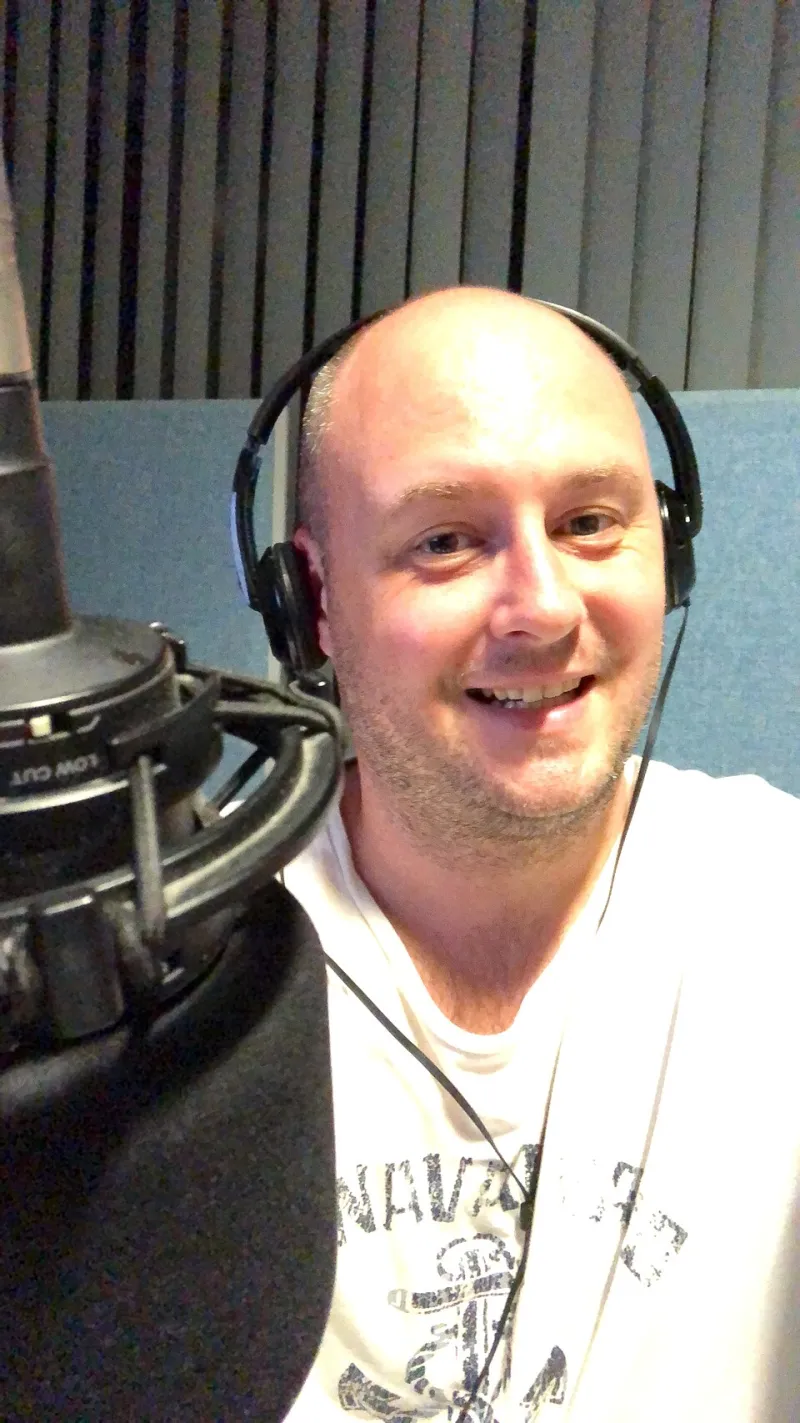
Photo: Desgoaten, CC BY-SA 4.0, via Wikimedia Commons
There is a specific sound to a remote broadcast, and it is not the sound of a studio. It's a shopping cart squeaking past the microphone. It's a compressor kicking on. It's the ambient hum of a room where people are doing something else entirely, and the host is talking into it anyway.
If you've never heard one, you've probably heard one. Drive-time remotes from car dealerships, morning shows from the county fair, all of it descended from a format that once dominated American radio: the store remote, where a station would set up in a downtown department store window and broadcast the shopping public through the glass.
This Used to Be Normal
From roughly the 1930s through the 1960s, remote broadcasts were a staple of local radio — department stores, hotel ballrooms, grand openings, county fairs, the dedication of a new bridge. Stations dragged phone lines across sidewalks and considered it a public service. When consolidation shrank local staffs and buried remotes under insurance paperwork, the format mostly vanished from commercial radio.
Community stations never entirely gave it up, and in the last few years they've been quietly reviving it — not at car lots, but at the businesses that make a neighborhood legible: the laundromat, the diner with twelve stools, the hardware store where the owner sharpens blades in the back.
Why a Hardware Store Beats a Studio
A studio is a controlled environment. That's the problem. A remote is uncontrolled, which means it's a credibility test, and credibility is the currency community radio spends.
Listeners know when a host is sitting in a real room. The acoustics tell them. So does the fact that a stranger walks up mid-sentence and asks the host where the three-eighths-inch compression fittings are, and the host has to answer honestly. That unedited, slightly messy exchange does more for trust than a year of polished promos, because it demonstrates the one thing a podcast can't: the station is physically somewhere.
For the business, the math is straightforward. It's not an ad, and it doesn't behave like one. It's a visit. Regulars come by to watch. People who've driven past for years finally walk in. One laundromat owner said the two hours of live broadcast produced more conversation than a month of social posts — and a queue for the good dryers.
The Folding Table Doctrine
Nobody should be impressed by the gear, because the gear is not impressive. A typical community-radio remote kit fits in the trunk of a sedan:
- A small four-channel mixer with USB out
- Two dynamic microphones and stands (one for the host, one for whoever wanders over)
- A laptop or tablet, running the station's automation and a backup audio recorder
- A bonded cellular hotspot and a phone as a redundant link
- Headphones, a pile of XLR cables, gaffer tape, a power strip, and an unreasonable number of extension cords
Total cost, for a station starting from scratch, is often under a thousand dollars — frequently less, because half of it was donated. The expensive part is the labor, and volunteer labor doesn't send invoices.
The Logistics Are a Comedy
Every remote veteran has a disaster story. The laundromat where the Wi-Fi died and the host read two hours of programming from a phone hotspot balanced on a detergent dispenser. The diner where the espresso machine's steam valve shared a frequency with something and every cappuccino punched a hole in the audio. The hardware store where a customer's dog, uninvited, delivered the most popular thirty seconds of the entire broadcast.
Contingency planning is therefore unglamorous and thorough: test the connection twice, record everything locally as a hedge, keep a full show's worth of backup material queued, and never, ever schedule a remote where the only bathroom is locked.
What It Actually Costs
Almost nothing, in budget terms. A remote typically costs the station a tank of gas, a couple of volunteer hours, and a thank-you — a mention, a coffee, a station shirt. Some stations ask businesses for a small underwriting contribution only after the fact, and only if the relationship already works. The point isn't revenue. The point is presence.
The Invisible Network
Here's the part that's easy to miss. A remote is a map of the relationships a station already has. The host knows the owner. The owner knows the landlord. The landlord's daughter volunteers at the station on Saturdays. Somebody's cousin is going to walk in with a box of produce during the second hour, and the host will talk to him for six minutes about a broken fence.
That is not filler. That is the social fabric of a town, broadcast live, at 10 a.m. on a Wednesday, to whoever happens to be listening. When a station runs a remote, it isn't just promoting a business. It's showing everybody in earshot how the neighborhood is wired together — who fixes things, who feeds people, who stayed open during the bad winter.
The Case for Doing More of Them
Community radio's advantages have never been technical. They're relational. A remote puts the station in arm's reach of the exact people it exists to serve, in a place they already go, doing something they already needed to do.
So the next time your local station announces a live broadcast from a self-storage facility or a feed store or a bowling alley, don't treat it as filler programming. Show up. The host is standing behind a card table with a borrowed microphone, half the town's invisible network is going to walk past, and something will go wrong on air.
That's the show.