Tote Bags, Telethons, and the Hour the Phones Wouldn't Stop Ringing

The folding table shows up in the lobby on a Monday morning, and by noon it is buried under a cash box, three landline phones, a bowl of clementines, and a laminated sheet titled IF SOMEONE ASKS ABOUT THE MUG.
That is how you know. Drive week.
For listeners, the membership drive is its own genre of radio. The regular programming loosens up, the hosts get a little punchier, and the ask sits right out in the open where nobody can pretend not to hear it. For the people inside the building, it is something stranger: the one week a year when a station's entire financial life gets auditioned in public, live, with a webcam pointed at the thermometer on the wall.
The Ask Is the Programming
A good drive doesn't interrupt the show — it becomes the show. Hosts work their pitch into the spaces where a commercial station would run a stopset, usually somewhere around the twenty and fifty minute marks, but the scripts get abandoned fast. The best breaks sound like a friend explaining why they need a ride to the airport: specific, unglamorous, done in under ninety seconds.
What makes it listenable is the honesty. A volunteer at a 250-watt station in the Midwest puts it plainly: "You're not selling anything. You're telling people the truth about a number, and then you're getting out of the way of the music." That station's drive typically brings in somewhere between a third and a half of its annual operating budget. Miss the goal and the consequences are concrete — fewer live hours, a stipend that doesn't get renewed, an overnight slot that goes back to automation.
Premiums: It's Never the Tote Bag
Every station has a tote. Nobody has ever joined a radio station to get a tote. The gifts that actually move are the weird ones, the ones that only make sense if you know the station: a jar of the Sunday host's hot sauce, a hand-screened shirt printed in somebody's garage, an hour of the overnight DJ building you a custom mixtape, a tour of the transmitter shack with the engineer who has kept it alive since the Clinton administration.
One station we know auctions off the chance to pick the entire music rotation for a single afternoon. It sells out in an hour and produces the most chaotic broadcast of the year, which is exactly the point. The premium isn't a product. It's access.
The Phone Bank Is the Actual Party
By Tuesday, the volunteer room has its own ecosystem. A retired schoolteacher who has worked the same shift since 2011. A teenager earning service hours who ends up staying four hours past her slot. The regular caller — every station has one — who phones in to pledge twenty dollars and stays on the line for eleven minutes of gossip.
Then there are the rituals. A bicycle horn for first-time members. A brass bell that gets rung so often by Thursday that someone hides it. A running tally on a whiteboard in handwriting that gets worse as the week goes on. Somebody brings donuts. Somebody else brings a slow cooker. Nobody remembers who started the argument about the correct way to fold a pledge card, but it is now tradition.
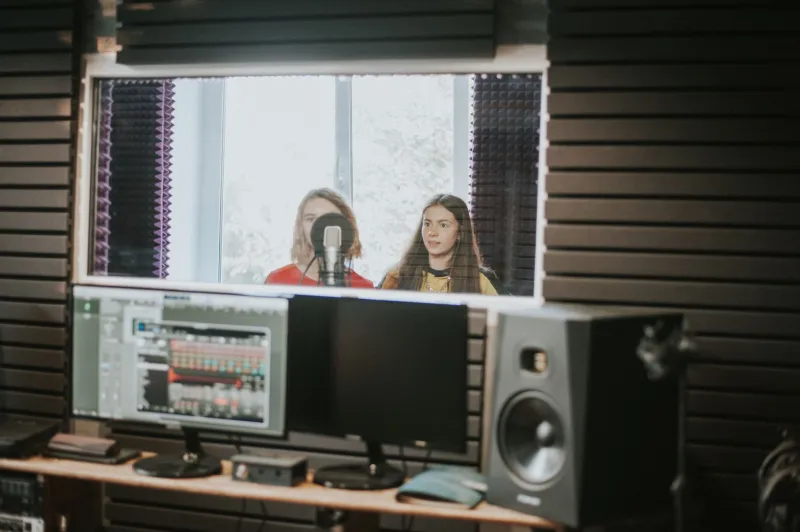
When the phones genuinely light up — all three at once, volunteers standing, the on-air host hearing the bell through the studio glass — it stops being fundraising and turns into the closest thing a small station has to a town square.
The Dare Board
Somewhere along the way, community radio discovered that mild public humiliation is a powerful economic engine. Stations post a list of escalating dares tied to dollar thresholds: at $5,000 the news director reads the weather in a full mascot costume; at $8,000 the morning host plays accordion on air; at $10,000 someone shaves something off someone else.
The dares are silly and they work, partly because they cost nothing and partly because they invert the usual dynamic. Listeners aren't being sold to. They're buying the right to make their neighbor do something goofy, which is a much older and more reliable transaction than commerce.
The Part Nobody Likes to Say Out Loud
Here's the honest half. A pledge drive is a public measurement of how much a station matters, and there is real vulnerability in that. Board members get quiet. The general manager refreshes the online total every eleven minutes. Staff who already wear four hats wonder, in the back of their minds, which hat gets cut if Thursday and Friday don't deliver.
There's a dignity question too. Asking listeners for money, repeatedly and cheerfully, for six straight days is a strange thing to do to a relationship. The stations that pull it off are the ones that don't perform gratitude like a costume — they say the number, say why it's the number, and then play the song they were going to play anyway.
What the Drive Actually Measures
Not loyalty. Loyalty is already established by the person who has listened for nine years. The drive measures reciprocity — the moment a listener converts from someone the station serves into someone who keeps the station possible. It's a census of who's out there and who plans to stay.
That's why the tally sheet matters less than it looks. Even a drive that lands under goal produces something the station can't buy the other fifty-one weeks of the year: a stack of names, a sense of scale, and proof that the thing is mutual.
The Monday After
The table comes down. The clementines get eaten. Someone finds the bicycle horn in the recycling and puts it back on a shelf where it will stay until next fall.
And then, at 6 a.m., the station goes back on the air and does the show it always does — a little hoarser, a lot more grateful, and still entirely listener-supported. Which is to say: still yours.