Lost Dogs, Free Pianos, and the Voice That Vouches for You
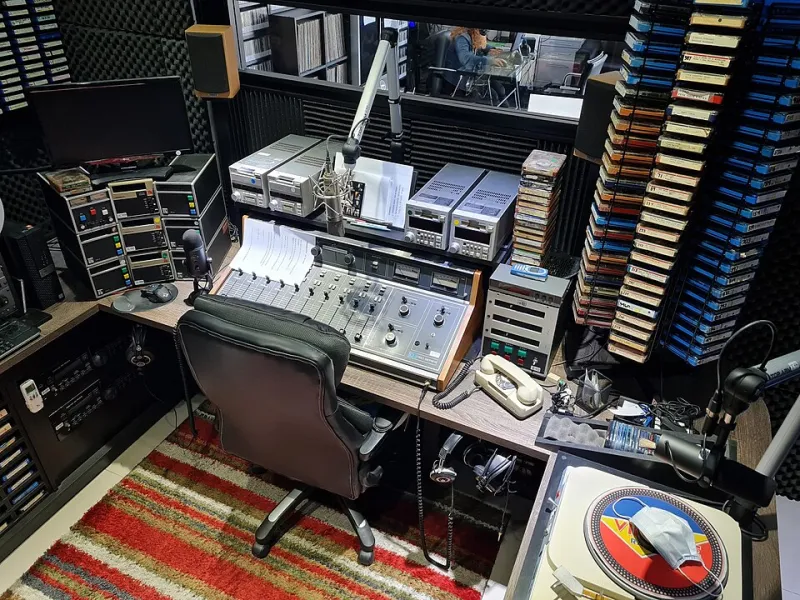
Photo: AmandaPenida, CC BY-SA 4.0, via Wikimedia Commons
The segment usually starts with a cough. Then a caller clears their throat, leans into the phone, and says something like, 'Good morning, I have a freezer that works but the door seal is shot, free to whoever can haul it.' For the next few minutes, the station is no longer a music provider or a talk show. It is a town square with a microphone.
On-air classifieds have been part of community radio for decades, and they remain one of the most quietly useful things a station does. Lost dogs. Free pianos. Babysitting gigs. Church suppers. Volunteer drivers. A set of snow tires. A room for rent. The listings are not polished. They are not searchable. They do not have a star rating system. That is exactly why people still call.
The Segment That Starts With a Cough
There is a rhythm to a good classifieds show. The host reads a few items, takes a caller, reminds everyone to keep it brief, and then moves on. The best hosts sound like they are leaning back in a kitchen chair. They know when to ask a follow-up and when to cut in because a caller is starting to describe their entire family history instead of the item they are trying to sell.
The callers are the show. There is the retired teacher who reads the church bulletin every week. The guy who always has tomatoes in August. The woman who calls to announce a lost cat and then calls back three hours later to say the cat was in the garage the whole time. The station does not need a content strategy for any of this. It needs a phone line and a host who can keep things moving.
Rules of the Swap Shop
Every station has its own rules. Some do not allow commercial listings. Some limit callers to one item per week. Some ask people to leave a first name and a phone number, but not an address. Some stations read the listings themselves so callers do not have to go live. The rules are not there to be fussy. They are there to keep the segment from turning into a free-for-all.
The unwritten rule is trust. If you say the piano is in good shape, people will remember. If you say you will be home at noon and you are not, someone will mention it. In a small broadcast area, reputation travels faster than any online review. That is the quiet advantage of an on-air classifieds board: it is tied to a voice, a name, and a local station that has been around long enough for people to know whether the regulars are reliable.
The Characters Who Call Every Week
Community radio classifieds attract regulars the way a diner attracts regulars. They are not celebrities. They are neighbors with a habit. The woman who announces the food pantry hours. The man who is always looking for a ride to the VA clinic. The couple who sell eggs from the trunk of their car. The host learns their voices. Listeners learn them too. After a while, the segment feels less like a marketplace and more like a roll call.
That is where the emotional part sneaks in. A lost dog listing is not just a lost dog. It is a town admitting that it pays attention. A free piano is not just a bulky object. It is somebody hoping the thing they love will end up in a living room instead of a landfill. A babysitting listing is a small act of faith. The caller is saying, out loud, that they need help and that they think the person on the other end of the radio might know somebody.
Why Voice Beats a Marketplace Listing
Social media marketplaces are efficient. They are also exhausting. They are built for scrolling, haggling, and ghosting. An on-air classifieds segment is slower, and that is the point. You have to call. You have to talk to a person. You have to hear the host say your name or your item out loud. There is a small cost to that, and the cost filters out some of the nonsense.
It also creates a public record of neighborliness. When a caller says, 'My neighbor is sick and I am trying to find somebody to mow the lawn,' the station is not just passing along information. It is turning a private problem into a shared one. That is a different kind of transaction than a buy-and-sell app. It is the sound of a town behaving like a town.
A Town Square With a Pulse
Community radio's classifieds board is not nostalgic decoration. It is infrastructure. It moves furniture, finds lost pets, fills shifts, and announces the church supper. It gives people a low-stakes way to be part of the public life of their town. And it does all of that without an algorithm deciding who gets seen.
The next time a host reads a listing for a free freezer and a caller says they will take it, listen closely. That is not filler. That is the neighborhood talking to itself.