Needle Down, Volume Up: How Community Radio Became the Unlikely Home of the Vinyl Revival
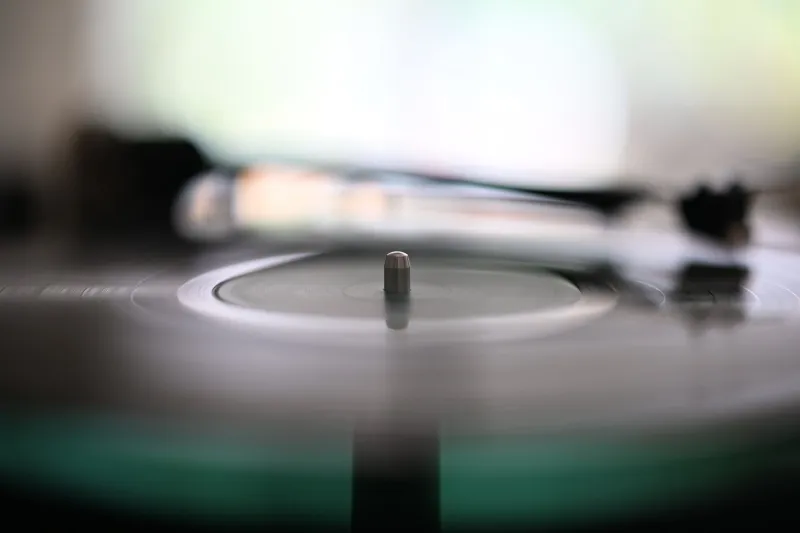
There's a particular sound that no streaming service has ever been able to fake. It's that faint crackle that lives in the groove before the first note hits — a tiny imperfection that somehow sounds more honest than anything algorithmically served up in a curated playlist. If you've heard it lately, there's a decent chance it came through your radio.
Community radio stations have always operated at the margins of the mainstream music industry, and for a long time, that felt like a limitation. Now? It might be their greatest advantage. As vinyl sales continue to climb year after year — the Recording Industry Association of America reported that LPs outsold CDs for the second consecutive year in 2023 — independent stations are discovering they've been sitting on something valuable this whole time: a culture that never let go of the physical.
The Crates Were Always There
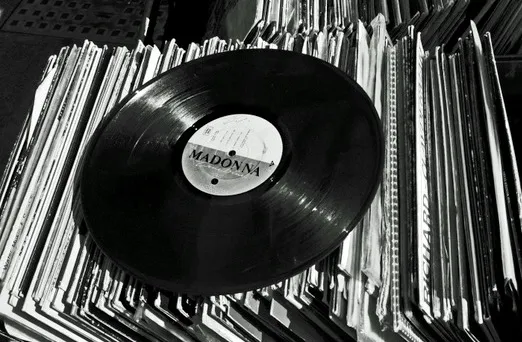
Walk into the back room of almost any community station that's been on the air for more than a decade and you'll find them — crates and shelves stacked with records that nobody ever threw away. Jazz imports. Regional blues pressings. Forgotten soul 45s. Prog rock double albums with gatefold sleeves that look like they belong in a museum.
For years, a lot of that collection just gathered dust while stations migrated to digital formats for convenience. But something shifted. DJs started pulling the old records back out — not as a gimmick, but because they genuinely sounded better, told richer stories, and offered something a digital file simply couldn't: a physical artifact with a history.
"When I play from vinyl on air, I'm not just playing a song," says one longtime community DJ who hosts a weekly late-night show at a listener-supported station in the Midwest. "I'm playing an object that someone bought at a record store that doesn't exist anymore, that sat in somebody's collection for thirty years before it found its way to us. That's a whole different conversation than hitting play on a Spotify track."
That conversation is one listeners are increasingly hungry to have.
Record Swaps as Community Events (and Fundraising Gold)
Some stations have taken the vinyl revival a step further, turning their love of physical media into actual programming and community events. Record swap meets — once the domain of dusty weekend flea markets — have found a new home on station parking lots and in community halls, often organized and hosted by the stations themselves.
These events do double duty. They generate real revenue for listener-supported operations that are always stretching their budgets, and they function as genuine gathering points for a community that's increasingly fragmented across different digital spaces. There's something about flipping through a crate of records next to a stranger that sparks conversation in a way a shared Spotify playlist never quite manages.
One station manager in the Pacific Northwest described their quarterly record fair as one of the most important things her station does all year — not because of the money it raises, though that helps, but because of who shows up. "We get people who haven't been to one of our events in years. We get teenagers who've never bought a record before standing next to sixty-year-old collectors. That mix? That's what community radio is supposed to look like."
The Deep Cut Advantage
Here's what streaming platforms will never do well: play the third track on side two of a 1974 album by a band that broke up before they could record a follow-up. The algorithm has no incentive to go there. The engagement metrics don't support it. The licensing deals get complicated.
Community radio has no such constraints. A DJ spinning vinyl isn't optimizing for skip rates or monthly listeners. They're sharing something they love, which means the deep cuts get the same airtime as the singles — sometimes more.
This is a genuinely radical act in the current media landscape. When everything about digital music consumption is designed to keep you in a comfortable loop of familiar sounds, a community station DJ who drops an obscure B-side between two better-known tracks is essentially committing an act of cultural defiance. And younger listeners, it turns out, are into it.
"I started listening to [the station] because my roommate had it on, and I heard something I'd never heard before," says a 24-year-old from Chicago who now volunteers at her local community station. "I didn't even know what it was. I had to call in to find out. That feeling — not knowing something and wanting to know — that's what got me hooked."
The call-in element matters here, too. When a DJ is spinning vinyl live on air, there's an organic reason to pick up the phone. What was that? Who made that? Can you play it again? That feedback loop between broadcaster and listener is exactly the kind of thing community radio was built for.
Why Younger Listeners Are Leaning In
The narrative around Gen Z and vinyl tends to focus on aesthetics — the Instagram-able quality of a record sleeve, the retro cool factor of a turntable in a bedroom. And sure, some of that is real. But spend any time talking to younger listeners who've found their way to community radio through the vinyl connection, and a different story emerges.
What they're actually after is authenticity. Not the performed authenticity of an influencer unboxing a record, but the real thing — music chosen by a human being with actual taste, played on equipment that demands care and attention, in a format that can't be shuffled or skipped without effort. In an era of infinite frictionless content, a little friction turns out to feel pretty good.
Community stations that have leaned into their vinyl collections are seeing it in their numbers. New memberships from younger demographics. More foot traffic at events. A listener base that skews broader than it did five years ago.
The Gatekeeping Nobody Asked For (But Everybody Needs)
The word "gatekeeper" has gotten a bad reputation, and fair enough — for most of music industry history, gatekeepers used their power to keep certain artists and genres locked out. Community radio has always pushed back on that model.
But there's a version of curation that isn't about exclusion — it's about care. Someone who has spent years building a vinyl collection, who knows why a particular pressing sounds better than the reissue, who can tell you the story behind an album before they drop the needle: that person is offering something genuinely valuable. Not a locked gate, but a guided path through territory that's too vast to navigate alone.
In a world where the algorithm will happily serve you ten thousand songs and somehow still leave you feeling like you haven't heard anything real, that guided path matters more than ever.
Community radio didn't set out to save vinyl. It just never stopped playing it. And now, almost by accident, it's become one of the last places where physical music culture is treated not as nostalgia, but as the living, breathing thing it always was.
The crackle in the groove isn't a flaw. It's proof that someone actually touched this music — held it, played it, loved it enough to keep it around. That's what's coming through your speakers. And that's why people are still listening.