No Face, No Feed, No Filter: Why Calling Into Radio Unlocks Honesty That Social Media Never Could
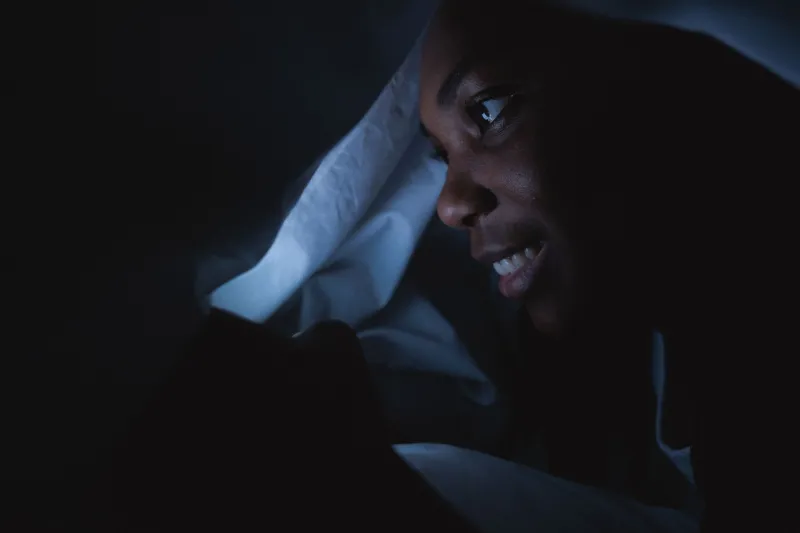
Somebody called a late-night community radio show last winter and said something they'd never told anyone. Not their spouse. Not their therapist. Not their closest friend. They said it into a phone, to a host they'd never met, over a frequency that reached maybe four thousand people in a mid-sized American city — and somehow, that was exactly the right audience.
The host didn't make it weird. They didn't screenshot it. They just listened, responded, and moved on to the next song.
That moment — quiet, unrecorded, unrepeatable — is happening in community radio booths all over this country, and it's worth paying attention to.
The Internet Never Forgets. Radio Kind of Does.
Here's the deal with social media: everything you post is a performance. Even when people think they're being raw and unfiltered, they're still choosing an angle, picking a filter, watching the likes roll in or not. The audience is visible. The record is permanent. And the algorithm decides who sees your vulnerability and when.
Radio doesn't work like that.
When you call into a community station, you're a voice. Maybe a first name. Maybe not even that — plenty of hosts will let you stay anonymous if you ask. There's no profile attached to what you say, no way for your coworker or your ex or your estranged sibling to stumble across it three years later. The moment exists, and then it's gone.
Psychologists have a term for environments that feel low-stakes enough to encourage genuine disclosure: they call it psychological safety. And it turns out radio — specifically the call-in format — is unusually good at creating it.
"There's a phenomenon sometimes called the 'stranger on a train' effect," explains the thinking behind it. You'll tell someone you'll never see again things you'd never say to the people in your daily life, precisely because the social consequences are minimal. Radio recreates that dynamic at scale. You're talking to a stranger. The conversation won't follow you home on a timeline. And the host, if they're good at their job, isn't there to judge you — they're there to hold the space.
What Hosts Hear That Nobody Else Does
Ask any veteran community radio host what surprises them most about the job and they'll usually say some version of the same thing: the calls that come out of nowhere.
A guy who called in to request a song and ended up talking for twenty minutes about losing his job and not knowing how to tell his family. A woman who dialed in during a music trivia segment and, once she'd answered the question, quietly mentioned that she'd just come home from a hospital where she'd said goodbye to her father. A teenager who called a college station at 2 AM just to say that it helped, knowing someone was there.
These aren't outliers. For hosts at independent and community stations — the kind running on listener support and volunteer hours, not corporate playlists and syndicated content — this is just Tuesday.
What makes it possible isn't just the anonymity. It's the intimacy of the medium itself. Radio is audio-only, which means listeners aren't distracted by visuals. They're not looking at a host's face, reading their body language, or forming snap judgments based on appearance. They're just listening to a voice. And voices, it turns out, are remarkably good at conveying warmth, safety, and presence — often better than a camera ever could.
Why Vulnerability on Social Media Feels Different
This isn't a knock on people who share honestly online. Some of the most important conversations happening in America right now are taking place on social platforms. But there's a structural difference in what those platforms reward.
Social media optimizes for engagement. That means the most emotionally charged content — the most dramatic, the most outrage-inducing, the most shareable — gets the most reach. Vulnerability that goes viral stops being private the moment it does. It gets quoted, screenshotted, debated by strangers, and sometimes weaponized.
There's also the performance pressure. Sharing something personal on Instagram or TikTok requires you to frame it, caption it, decide how much to show. Even the most authentic-seeming posts involve editorial decisions. And then you wait. For the response. For the validation. For the algorithm to decide if your pain was interesting enough.
Radio doesn't ask any of that of you. You call. You talk. Someone listens. The signal moves on.
The Community Station Difference
This dynamic is especially pronounced at independent and community stations — the kind Da Barra Radio is built around. These aren't slick operations with legal teams and broadcast standards departments vetting every caller. They're neighborhood voices, staffed by people who genuinely live in the communities they serve.
That matters. When you call a community station, you're not calling a corporation. You're calling your neighbor, essentially. Someone who shops at the same grocery store, whose kids might go to the same school, who knows what it means when you say "the plant layoffs" or "the flooding last spring" because they lived it too.
That shared context creates a different kind of trust. And trust, more than anonymity alone, is what makes people brave enough to say the real thing.
Hosts at community stations often develop what you might call a pastoral role — not quite therapist, not quite journalist, but something in between. They hold information. They check in on regulars. They notice when someone who calls every Friday night suddenly goes quiet for a month.
What This Means for the Rest of Us
We're living through a strange paradox. People have never had more tools to share themselves publicly, and yet genuine human connection feels increasingly hard to find. Social media gave everyone a megaphone but made authentic conversation rarer. Oversharing became a content strategy. Vulnerability became a brand.
Radio — especially the scrappy, listener-supported, community-driven kind — is running a different experiment. One where the goal isn't reach or engagement or follower count. The goal is just: did someone feel heard tonight?
And apparently, a lot of people need that. The call volume at independent stations tells that story. The length of conversations that were only supposed to be request lines tells that story. The hosts who stay an extra hour after their shift because someone needed to keep talking — they tell that story too.
The booth has always been a kind of confessional. People just forgot to notice.
Maybe it's time to pick up the phone.