When the Press Box Went Dark, the Airwaves Lit Up: Community Radio's Unlikely Rise as Local News
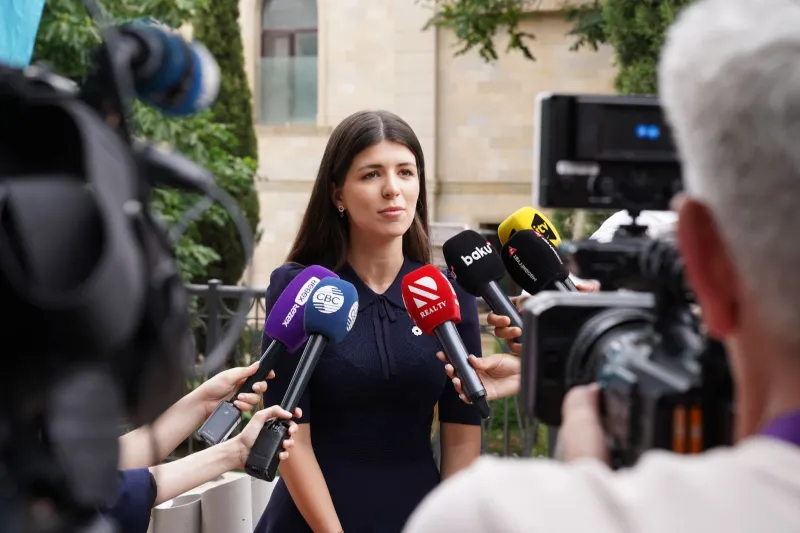
There used to be a reporter at most of those city council meetings. Someone with a press badge, a notebook, and a deadline. They'd sit through three hours of zoning disputes and budget line items so the rest of us didn't have to — and then they'd file a story that told us what actually mattered.
That reporter is mostly gone now.
Over the past two decades, the US has lost more than a third of its local newspapers and thousands of local journalism jobs. Hedge funds bought up regional outlets and stripped them for parts. Digital ad revenue collapsed. Entire counties became what researchers call "news deserts" — places where nothing of local significance gets covered unless it's dramatic enough to catch a national wire.
But something else happened in that vacuum. Something quieter, and maybe more durable.
The radio stayed on.
The Beat Nobody Else Was Walking
In cities and towns across the country, community radio stations have been filling the reporting gap in ways that don't always get recognized as journalism — but absolutely are. Volunteer broadcasters showing up to school board hearings. DJs doubling as neighborhood watchdogs, putting out real-time alerts when something goes sideways on a local block. Station managers assigning "coverage" of community events the way an editor would assign a beat.
It's not always polished. The production values vary. Sometimes the person behind the mic is nervous, or they stumble over a name, or the audio cuts out for half a second. But the information is accurate, it's local, and it's coming from someone who actually lives there.
That last part turns out to matter enormously.
A 2022 survey by the Pew Research Center found that Americans' trust in local news, while declining overall, still outpaces their trust in national outlets by a significant margin. And within that local trust, community-rooted sources — neighborhood newsletters, hyperlocal podcasts, and yes, community radio — consistently rank higher than legacy local TV affiliates that have consolidated their operations across multiple markets.
People can feel the difference between a report filed from a newsroom two states away and a story told by someone who drove past that intersection this morning.
What "Covering the News" Actually Looks Like at a Community Station
At stations operating under the community radio model, the news function often looks nothing like a traditional newsroom — and that's kind of the point.
Take a station like the ones Da Barra Radio draws inspiration from: listener-supported, volunteer-heavy, deeply embedded in a specific neighborhood or city. The "news desk" might be one person with a recorder and a strong opinion about what their community deserves to know. Coverage decisions aren't made by corporate executives in a glass tower — they're made by people who go to the same bodegas and barbershops as their listeners.
That closeness shapes everything. A community station is more likely to cover a proposed rezoning that would displace a block of longtime residents than a national outlet chasing clicks. They're more likely to broadcast a translated segment for a non-English-speaking neighborhood. They're more likely to give airtime to a local organizer who's been trying to get a stoplight installed at a dangerous intersection for two years — not because it's a big story, but because it's a real one.
This is hyperlocal journalism in its truest form. Not glamorous. Not viral. Just useful.
Trust Built Over Time, Not Over Algorithms
One of the most consistent things you hear from community radio listeners is some version of: "I trust them because they're not trying to scare me."
National news — cable especially — operates on an engagement model that rewards outrage, urgency, and conflict. Local corporate TV has largely followed suit, leading with crime coverage that skews heavily toward certain neighborhoods while ignoring systemic issues that don't make for good footage.
Community radio doesn't have that incentive structure. They're not chasing ratings the same way. They're not selling the same ads. Their survival depends on whether their listeners feel genuinely served — and listeners notice when they're being served versus when they're being manipulated.
That accountability runs in both directions, too. When a community station gets something wrong, the person who made the mistake is likely to run into a listener at the grocery store. That proximity is a form of editorial pressure that no corporate oversight committee can replicate.
The Volunteer Reporter Problem — And Why It's Not Actually a Problem
Critics of community radio as a journalism outlet often point to the volunteer model as a liability. No professional training. No editors. No institutional backing. These are fair concerns, and they're worth taking seriously.
But the criticism misses something important: the community radio model has always been about building capacity from within a community rather than parachuting expertise in from outside. Many volunteer broadcasters covering local news are deeply knowledgeable about the communities they serve — former teachers, longtime residents, small business owners, people who've been showing up to city meetings for years before anyone handed them a microphone.
And the training gap is being addressed. Organizations like the Prometheus Radio Project and various regional journalism foundations have developed programs specifically to help community broadcasters develop reporting skills. The infrastructure for credible community journalism over the airwaves is growing, even if it doesn't always look like a traditional newsroom.
What Gets Lost When Nobody's Listening
Here's the thing about news deserts: they don't just mean people are uninformed. They mean decisions get made without public scrutiny. Contracts get signed. Policies get passed. Developments get approved. And the people most affected — who are usually the people with the least political power — have no idea it happened until it's already done.
Community radio can't solve all of that. It's not a replacement for a fully funded, professionally staffed local press. But it's not nothing, either. In a lot of places right now, it's the closest thing to a watchdog that a community has left.
That's a heavy responsibility to carry on a volunteer's shoulders. But across the country, people are picking it up anyway — setting up equipment in spare rooms, driving to city hall with a recorder, broadcasting from community centers and church basements and wherever the signal will reach.
The press box went dark. The airwaves answered.
And for a lot of communities, that frequency — stubborn, scrappy, and stubbornly local — has become the most important voice they've got.