When the Radio Spoke Directly to Me: Listeners on the Moments That Got Them Through
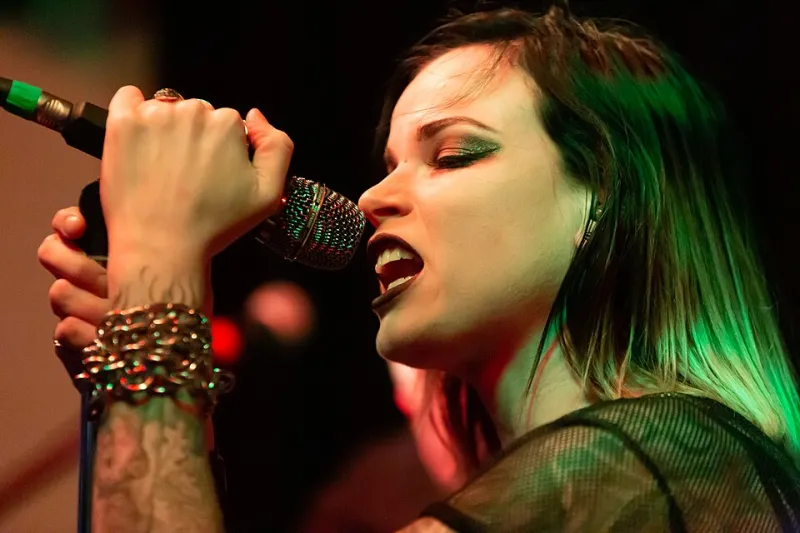
Photo: Steffen Prößdorf, CC BY-SA 4.0, via Wikimedia Commons
There's a version of this story that sounds almost too convenient to be true. Person hits rock bottom. Radio plays the right song. Person finds a reason to keep going. But the more you dig into it, the more you realize this isn't a cliché — it's just something that keeps happening, over and over, in living rooms and car dashboards and hospital waiting rooms all across the country.
Community radio, by its very nature, doesn't know you exist. There's no data profile, no listening history, no algorithm quietly predicting your mood. And somehow, that's exactly what makes moments of connection feel so startling when they land.
The Difference Between Curated and Chosen
Spotify knows you pretty well at this point. It knows what you played on repeat after a breakup, what you throw on when you're trying to hype yourself up for a Monday morning, what tempo you prefer when you're falling asleep. That's not nothing. But it's also not the same as a real human being sitting in a studio, deciding that this song needs to go out into the world right now, tonight, for whoever's listening.
That distinction matters more than most people think.
Marcus, 38, from outside of Knoxville, Tennessee, was going through a divorce and working nights when he started tuning into a small community station out of habit. He'd grown up listening to it with his dad. "I wasn't even really paying attention half the time," he says. "But one night the DJ — I think his name was Terry — he came on between songs and just said something like, 'I don't know who needs to hear this tonight, but things that feel permanent usually aren't.' And then he played this old Townes Van Zandt track I'd never heard before."
Marcus laughs a little telling the story. "It sounds so small. But I pulled over and just sat there for a minute. Because it felt like someone was actually in the room with me."
That's the intimacy that community radio does better than almost any other medium. It's unscripted, unpolished, and deeply human.
Talk Radio That Actually Talks Back
It's not just the music. Talk shows on independent stations carry their own kind of weight, especially when the host is someone who lives in the same zip code as their listeners.
Denise runs a Sunday morning show on a listener-supported station in western North Carolina. She's been doing it for eleven years, mostly covering local stories, taking calls, playing gospel and soul. She estimates she spends about as much time on the phone after the show as she does actually broadcasting.
"People call the station line during the week," she says. "They'll say, 'I heard you talking about the food bank last Sunday and I just wanted to tell you what happened to me.' And then they'll be on the phone for forty-five minutes."
Denise lost a listener to suicide a few years ago — a man who'd been a regular caller. She still thinks about him. "He was funny. He had opinions about everything. He called in once just to argue about biscuit recipes." She pauses. "I think about whether there was something we could have done differently. But I also think about how many people that show gave a reason to turn on the radio on Sunday morning. That's not nothing either."
The therapeutic value of feeling heard is well-documented. What's less discussed is how community radio creates that feeling passively, without requiring anyone to pick up the phone or admit they're struggling. You can just listen. You can just be in the presence of someone who sounds like they care about the same streets you drive on.
The Loneliness You Don't Talk About
America has a loneliness problem. That's not a controversial statement anymore — the Surgeon General said it outright in 2023. But the solutions people reach for tend to be digital, which is a bit like prescribing more screen time to someone with eye strain.
Community radio is analog in its bones, even when it streams online. The model is built around presence — a person in a room, talking to other people who are somewhere else but tuned in. There's a shared time, a shared frequency, a shared experience that isn't curated for any individual.
Jordan, 25, found a college radio station in Philadelphia during the height of COVID lockdowns. She'd moved there for a job that evaporated within weeks of arrival. "I didn't know anyone. I was in this apartment and I just felt like I was disappearing."
She started listening to a late-night show hosted by a student DJ who played a strange mix of post-punk and Appalachian folk music. "It was so specific and so weird and I just loved it. I started texting in requests. And then the DJ actually read my name on air and said she was glad I was listening." Jordan's voice catches slightly. "I cried. Which is embarrassing to say. But I cried because I felt like I existed to someone."
She volunteers at the station now.
What DJs Carry With Them
Ask any long-time community radio host and they'll tell you: they know their listeners are out there in the dark, going through things. It shapes how they work.
"I think about the person who's alone," says Ray, who hosts a weeknight show on a Gulf Coast station. "I always have. Before I play something, I think about what it would feel like to hear this if today had been really bad. Not every song has to be uplifting. Sometimes you want someone to just acknowledge that the world is hard."
Ray has a ritual: he ends every show with what he calls a "landing song" — something gentle, something that gives people permission to exhale. "I've had people email me specifically about that. Years later. They remember the song, they remember the night, they remember where they were."
Streaming platforms will never send you that email. They don't have a Ray.
Frequency as Community
Da Barra Radio exists because of this belief — that your community deserves a voice that reflects it, that knows it, that shows up for it. Not a playlist. Not an algorithm. A frequency.
The stories above aren't outliers. They're what happens when you give people something real. A human being on the other side of a signal, making choices about what matters, what needs to be said, what song fits this particular Tuesday night in this particular town.
You can't manufacture that. You can only build the infrastructure for it, keep the transmitter running, and trust that the connection will happen — because it always does.
If community radio has ever gotten you through something, we want to hear about it. That's what the frequency is for.